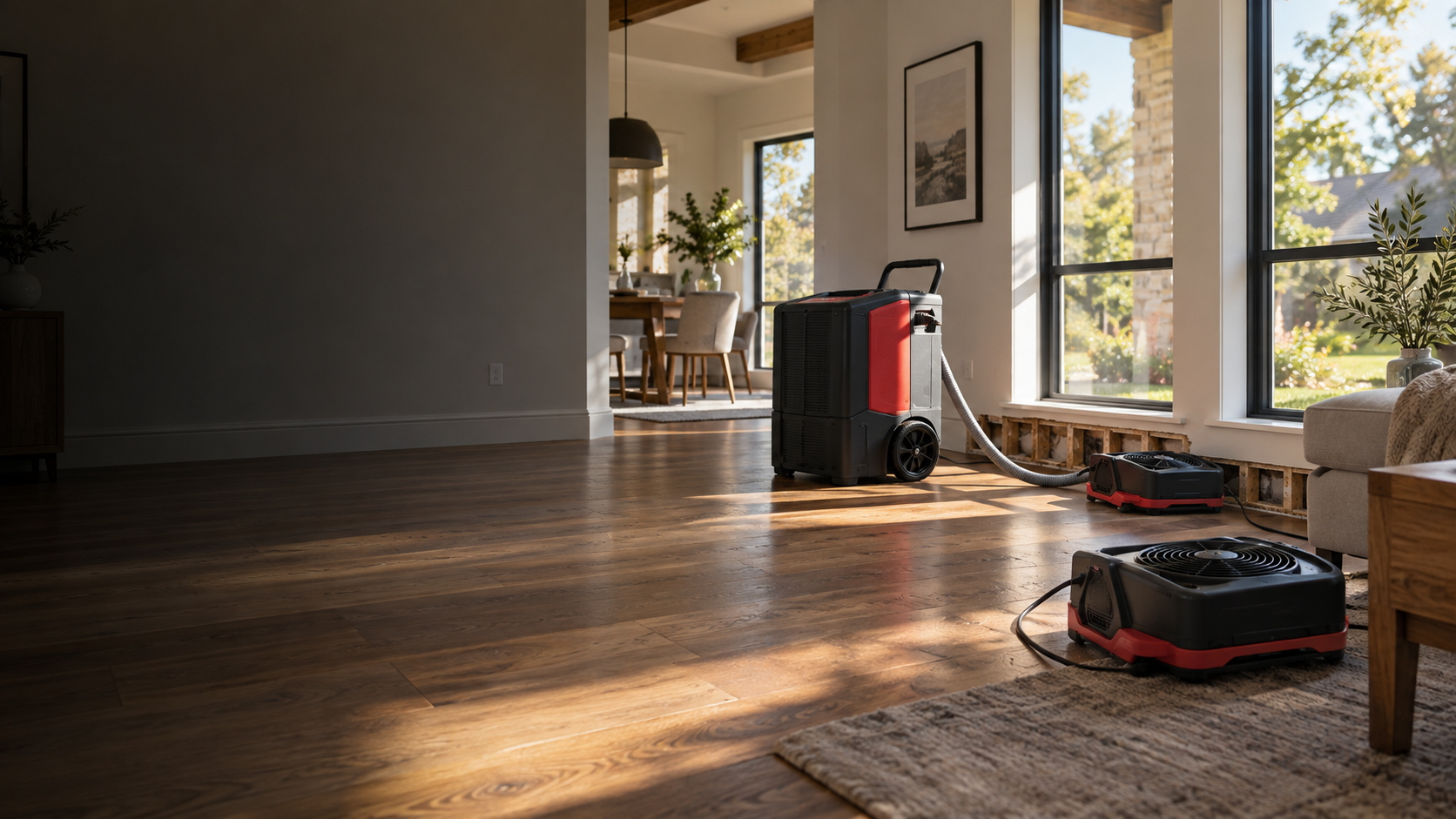
 Illustrative scene · not a completed project
Find where the water has spread.
We look at the affected rooms and take moisture readings in accessible areas. These readings help identify wet materials and plan the drying work. We explain any areas we cannot inspect and when another specialist may be needed.
Remove standing water.
Extraction equipment removes standing water and, where appropriate, water held in carpet or other materials. The surfaces and condition of the water determine the approach.
Dry wet materials.
Air movers circulate air across wet surfaces, while dehumidifiers remove moisture from the air. We place the equipment around the affected materials and adjust the setup as drying progresses.
Check drying progress.
Follow-up moisture readings show how drying is progressing and help us adjust the equipment. Drying time depends on the materials, how far water spread and the conditions in the property.
Review the results and remaining repairs.
At the end of drying, we explain the results and any repairs still needed. Flooring, drywall and paint may need separate repair or replacement.
Common causes of water damage.
Tell us if sewage, outside floodwater or suspected contamination is involved. These situations can require a different approach or a specialist.
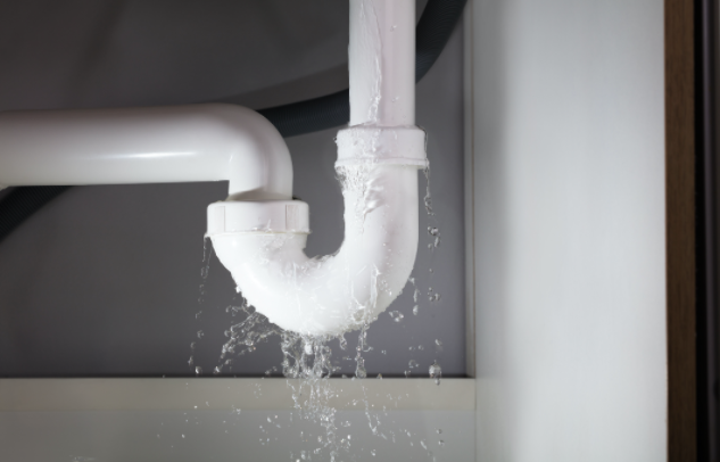
- Burst pipes or broken supply lines.
- Leaking water heaters and appliances.
- Overflows that reach flooring, cabinets or walls.
- Water left behind after a leak has stopped.
Fix the source of the leak.
Water removal and drying address the water already in your property. The leak itself also needs repair. Our sister company, Brazos Plumbing, handles plumbing repairs as a separate service. Roof or appliance problems may need a different trade.